SLS Selective Laser Sintering technology: An efficient and precise 3D printing solution
Selective Laser Sintering (SLS for short) is an advanced additive manufacturing technology that uses high-power lasers to selectively sinter powder materials and accumulate them layer by layer to form three-dimensional solid parts. This technology has developed since the 1980s and has become an important part of industrial-grade 3D printing.
Working principle
The workflow of SLS technology includes the following key steps:
Powder spreading stage: Evenly spread a very thin layer of powder material on the forming platform
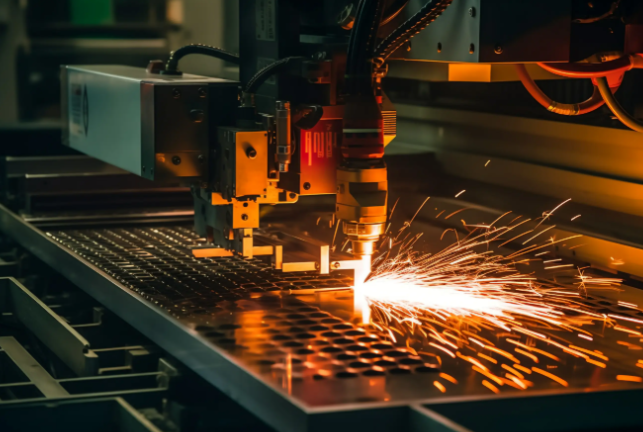
Sintering process: Based on the CAD model slice data, the laser beam selectively scans and sinters the powder particles
Cooling and curing: The area after sintering cools and solidifies to form the cross-section of the part
Cyclic repetition: The platform descends, and the powder spreading and sintering processes are repeated until the part is fully formed
Technical advantage
1. Excellent processing performance
SLS technology features a high-precision standard of ±0.2mm/100mm, with a maximum forming size of 350×350×420mm, which can meet the size requirements of most industrial applications.
2. Rich material selection
Supports multiple engineering materials
Nylon series (FS3300PA) : It features excellent mechanical strength and wear resistance
Nylon glass fiber composite material (FS3400GF) : Offers higher rigidity and thermal stability
Special materials: including metals, ceramics and their composite materials
3. No supporting structure is required
The unsintered powder naturally supports the parts during the manufacturing process. This feature makes SLS particularly suitable for manufacturing:
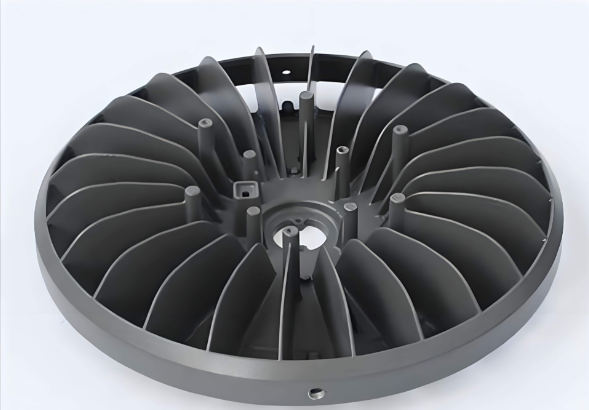
(1) Complex internal cavity structure
(2) Nested assemblies
(3) Large overhang and inverted features
4. High material utilization rate
Unused powder can be recycled and reused, and the material utilization rate usually reaches over 95%, significantly reducing production costs.
Application field
Industrial manufacturing
Rapid verification of functional prototypes
Small-batch customized production
Manufacturing of complex tooling fixtures
Medical and health care
Personalized surgical guide plate
Bionic implant
Rehabilitation equipment
Aerospace
Lightweight structural components
Engine components
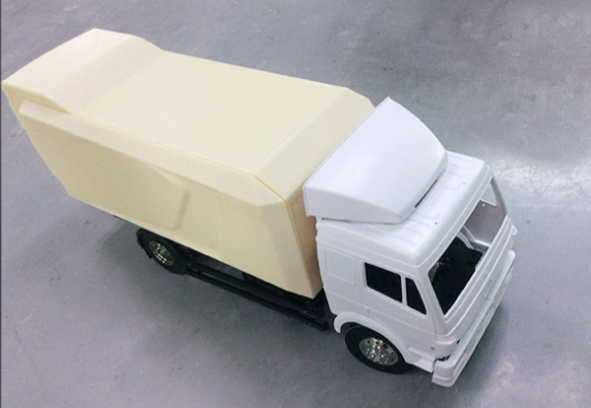
Aerodynamic test model
Automobile manufacturing
Complex components such as intake manifolds
Customized modification parts
Prototype production during the research and development stage
Technical challenges and development trends
Current challenges
The equipment cost and maintenance expenses are relatively high
The surface roughness needs to be further improved
The post-processing procedures are relatively complex
Future development direction
Multi-material printing: Achieving the integration of different materials in the same part
Large-scale equipment: Develop industrial-grade equipment with larger forming volumes
Intelligent control: Introduce artificial intelligence to optimize process parameters
Green Manufacturing: Further enhance material recycling rate and environmental friendliness
Conclusion
SLS selective laser sintering technology, as an important branch in the field of additive manufacturing, is reshaping the production methods of traditional manufacturing. Its unique technological features and broad application prospects make it one of the key technologies driving the digital transformation of the manufacturing industry. With the continuous advancement of materials science and process technology, SLS is bound to play a significant role in more fields, providing strong technical support for innovative design and intelligent manufacturing.
 Previous