How to choose between aluminum alloy casting processing and CNC processing?
When choosing between aluminum alloy casting processing and CNC processing, multiple factors need to be considered to determine which method is most suitable for the specific project requirements. Here are some key considerations that can help you make a decision.
I. Aluminum alloy casting processing
Advantages
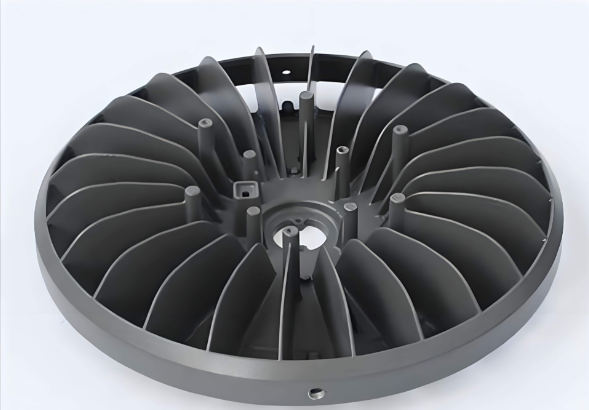
Complex shape manufacturing: Casting processes can produce aluminum alloy parts with complex shapes and internal structures. For those designs that are difficult to achieve through other processing methods, casting is an ideal choice. For instance, components with complex inner cavities such as engine blocks and pump casings are usually manufactured by casting processes.
Cost-effectiveness: In large-scale production, casting processing usually has a high cost-effectiveness. Once the mold is completed, a large number of identical parts can be produced quickly. After sharing the mold cost, the cost of each individual part is relatively low.
Good mechanical properties: Through reasonable casting process control, good mechanical properties such as strength, hardness and toughness can be obtained. Different casting methods (such as sand casting, die casting, etc.) can meet different performance requirements.
High material utilization rate: During the casting process, the material utilization rate is relatively high, reducing waste. Especially for some large parts, casting can make better use of raw materials and reduce costs.
Disadvantage
Relatively low precision: Compared with CNC machining, the precision of casting processing is usually lower. Cast parts may require subsequent processing to improve dimensional accuracy and surface quality.
The surface quality needs to be improved: The casting surface is usually rather rough and requires subsequent grinding, polishing and other treatments to achieve better surface quality.
High mold cost: For new product development or small-batch production, mold cost may be a significant burden. Moreover, the production cycle of molds is relatively long, which may affect the progress of the project.
Ii. CNC Machining
Advantages
High-precision machining: CNC machining can achieve extremely high precision and can meet the processing requirements of parts with strict demands for dimensional accuracy and surface quality. For instance, components in the aerospace field typically require CNC machining to ensure precision and reliability.
High flexibility: CNC machining can be programmed according to different design requirements, easily achieving the processing of complex shapes. CNC machining has significant advantages for small-batch production or customized parts.
Good surface quality: CNC machining can achieve a very smooth surface quality without the need for extensive subsequent processing. This is very important for some parts that have high requirements for appearance.
Short production cycle: Compared with casting processing, the production cycle of CNC processing is usually shorter. Especially for small-batch production, CNC machining can quickly respond to customer demands and shorten the time to market for products.
Disadvantage
High cost: The equipment and tools for CNC machining are costly, and the processing time is relatively long. Therefore, in large-scale production, the cost may be relatively high.
The processing of complex shapes is limited: Although CNC machining can achieve the processing of complex shapes, for some extremely complex internal structures, it may be restricted by processing tools and processes.
Low material utilization rate: During the processing, there will be a certain amount of material waste, especially for some large parts, the material utilization rate may be relatively low.
Iii. Considerations for Selection
Part design requirements
If the parts have complex shapes and internal structures, casting processing may be a better choice. However, if the requirements for dimensional accuracy and surface quality are extremely high, CNC machining is more suitable.
Consider the size and weight of the parts. For large parts, casting processing may have more advantages, while for small and precise parts, CNC processing may be the preferred choice.
Production batch size
For large-scale production, casting processing usually has a cost advantage. However, if it is small-batch production or customized parts, the flexibility and rapid response capability of CNC machining may be more attractive.
Cost budget
Consider the cost budget of the project. If cost is a significant factor, it is necessary to comprehensively consider factors such as mold cost, equipment cost, processing time and material utilization rate to determine which processing method is more economical and cost-effective.
Delivery time
If the project has urgent delivery time requirements, the short production cycle of CNC machining may be more suitable. However, the mold production cycle for casting processing is relatively long, which may affect the delivery time.
In conclusion, the choice between aluminum alloy casting processing and CNC processing should be determined based on the specific project requirements. Before making a decision, it is recommended to fully consider factors such as the design requirements of the parts, production batch, cost budget and delivery time, in order to select the most suitable processing method. At the same time, you can also consult professional processing manufacturers to obtain more suggestions and technical support.
 Previous